It’s Saturday in Athens
The Road to Game Day, and the People Who Build It

Picture Sanford Stadium. What do you see? A sea of 93,000 fans in red and black, cheering loudly as the Bulldogs storm the field maybe; or perhaps your memory is drawn to the Redcoat Band as they urge the crowd to grow louder and louder; or maybe you recall the fans sitting next to you during the 2019 Notre Dame game, when the lights went down and came back a brilliant, blazing red.
Whatever your memories of home games in Athens, they were built on the efforts of dozens and dozens of staff members at the University of Georgia who work hard to create unforgettable experiences and an incomparable environment.
And just like a successful football play requires every player to execute a precise, coordinated sequence of movements, so too does a successful Sanford Saturday require a different set of players to plan, prepare and perform at a high level.

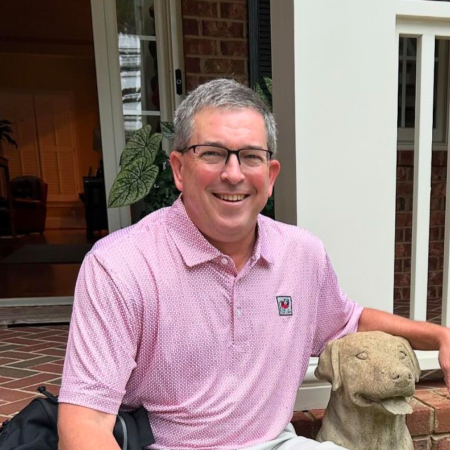


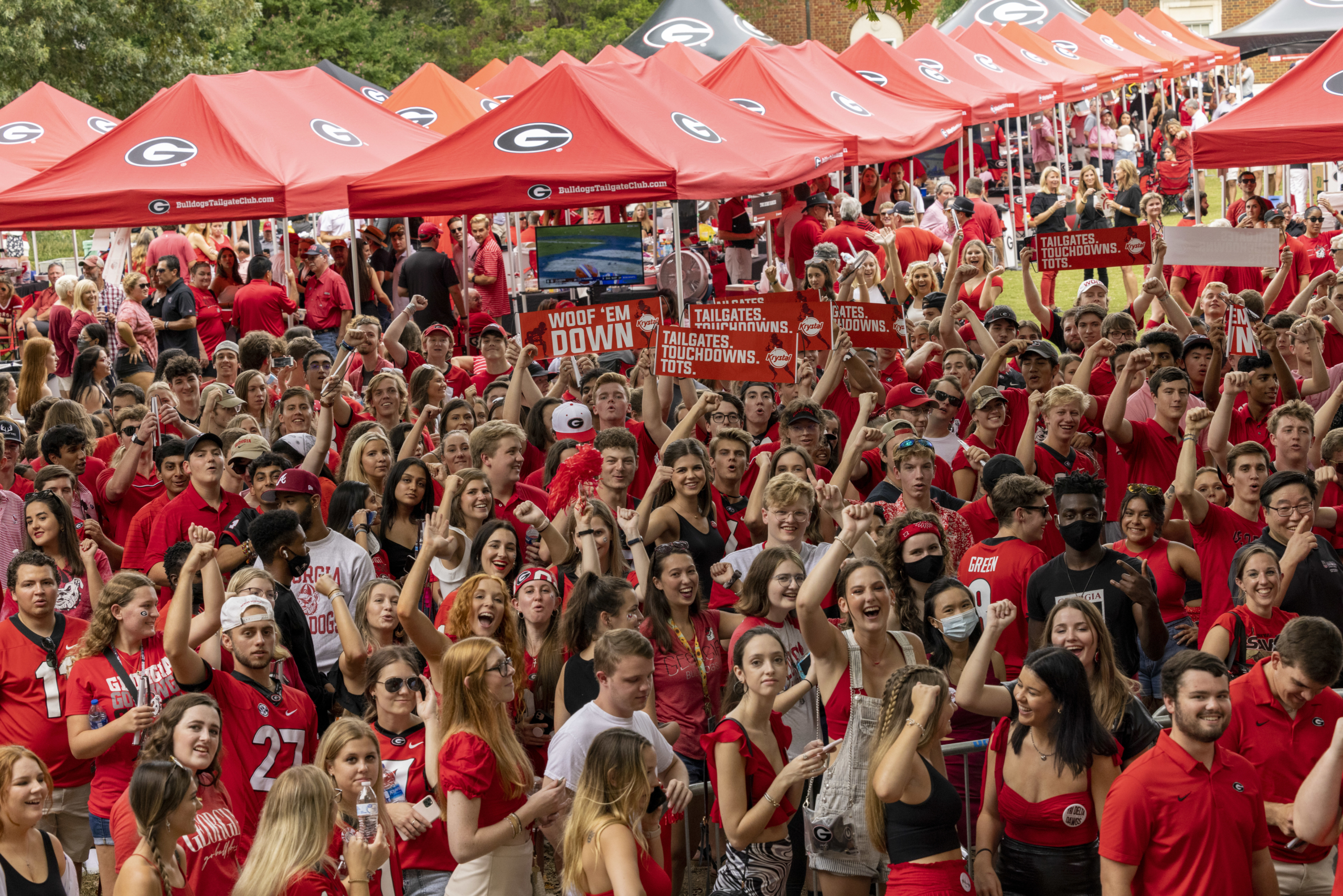
The first steps into Sanford Stadium on a game day can be overwhelming. The senses are flooded: the size of the stadium, thousands of elbows and feet brushing and bumping as the crowd streams through the gates, the smells of concession stands. And in the middle of Reed Plaza’s river of red and black, Carolyn Wallace wields a phone and clipboard like a sword and shield against game day chaos.
As the director of event management for UGA Athletics, Carolyn operates as the keeper of the keys for home games at Sanford Stadium. But to Carolyn, her role is about more than simple access. It’s about first impressions.
“We’re really the first checkpoint as they go into the stadium, so it’s important that everyone has a good experience so that they start off the game on the right foot,” she says.
Carolyn’s preparation for football season begins way back in July. This is when she creates signs for the stadium, organizes wristbands, and coordinates with campus partners about what to expect in the season ahead. Parking, construction, lessons learned from last year; all of these are bouncing around Carolyn’s brain as she prepares for each football season in Athens.
On the day, she unlocks bathrooms inside the stadium, manages the gates at Reed Plaza, and makes sure law enforcement have everything they need. Carolyn also makes sure the nurses and doctors from Piedmont Hospital have access to the stadium’s first aid rooms.
But we’re still only getting started. Carolyn distributes around 50 mobile phones each game to contractors and external staff so that they can communicate with each other and scan tickets. She monitors those communications throughout the game, always ready to troubleshoot and offer support. She escorts game officials to their locker rooms. Carolyn and her staff also help players move from one end of Dooley Field to the other after the game to complete any media obligations or interviews, so her preparation also includes creating a clear path to navigate the often-chaotic post-game excitement.
Yet even with the breakneck pace of her role, poignant moments can cut through the static. Like most university employees, the highlight of Carolyn’s job is watching students succeed, and one of her favorite moments happens on Senior Day, when athletes about to graduate are honored during their final game in Sanford Stadium.
“It’s so amazing to see all the athletes that I’ve been working with for their entire college careers at that moment of accomplishment,” she says. “Just to see how they’ve grown, how they’ve changed, how they’ve impacted their program. It’s a bittersweet moment, because I’m sad to say goodbye, but also so proud of what they’ve done.”
As tens of thousands file into Sanford Stadium and head for their seats, each one will pass numerous concessions and merchandise stands. John Bateman, the assistant athletic director for marketing with UGA Athletics, wants to make it easy for every fan to enjoy that convenience.
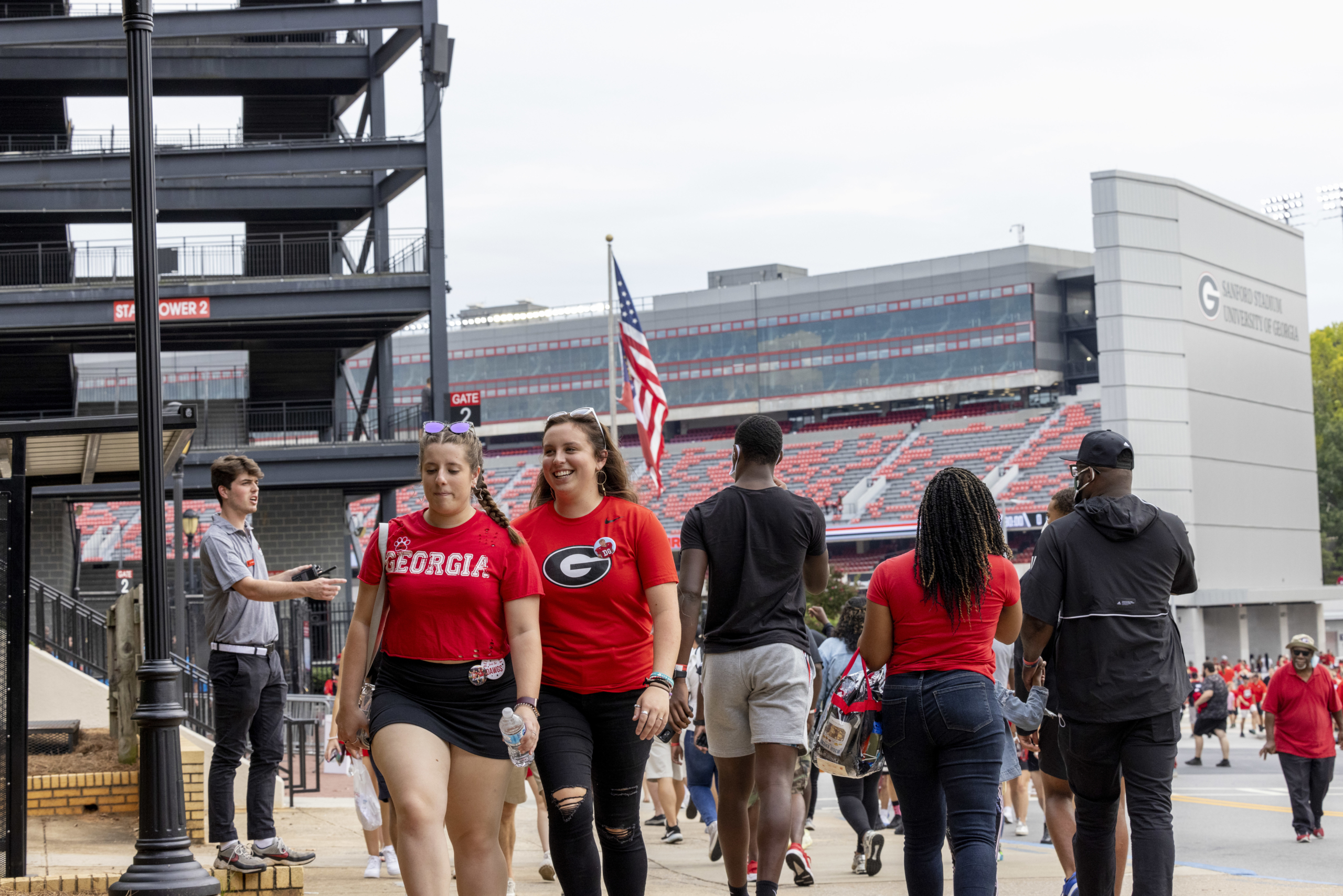
“We may not have an impact on the outcome of the game, but we do impact the fan experience,” John says. “Seeing people leave the stadium with a smile on their face — win or lose — is the most important thing for us.”
Like many stadium staff, John’s game day starts on Monday, at a football operations meeting that brings together every department with a game day role. If you’re picturing something like a modern-day, red-and-black Knights of the Round Table, you’d only be a little off.
After the meeting of the football minds, John takes a tour of the stadium, walking to every concession stand in Sanford to make sure that all the machinery — ice machines, coolers, heaters, etc. — are running efficiently.
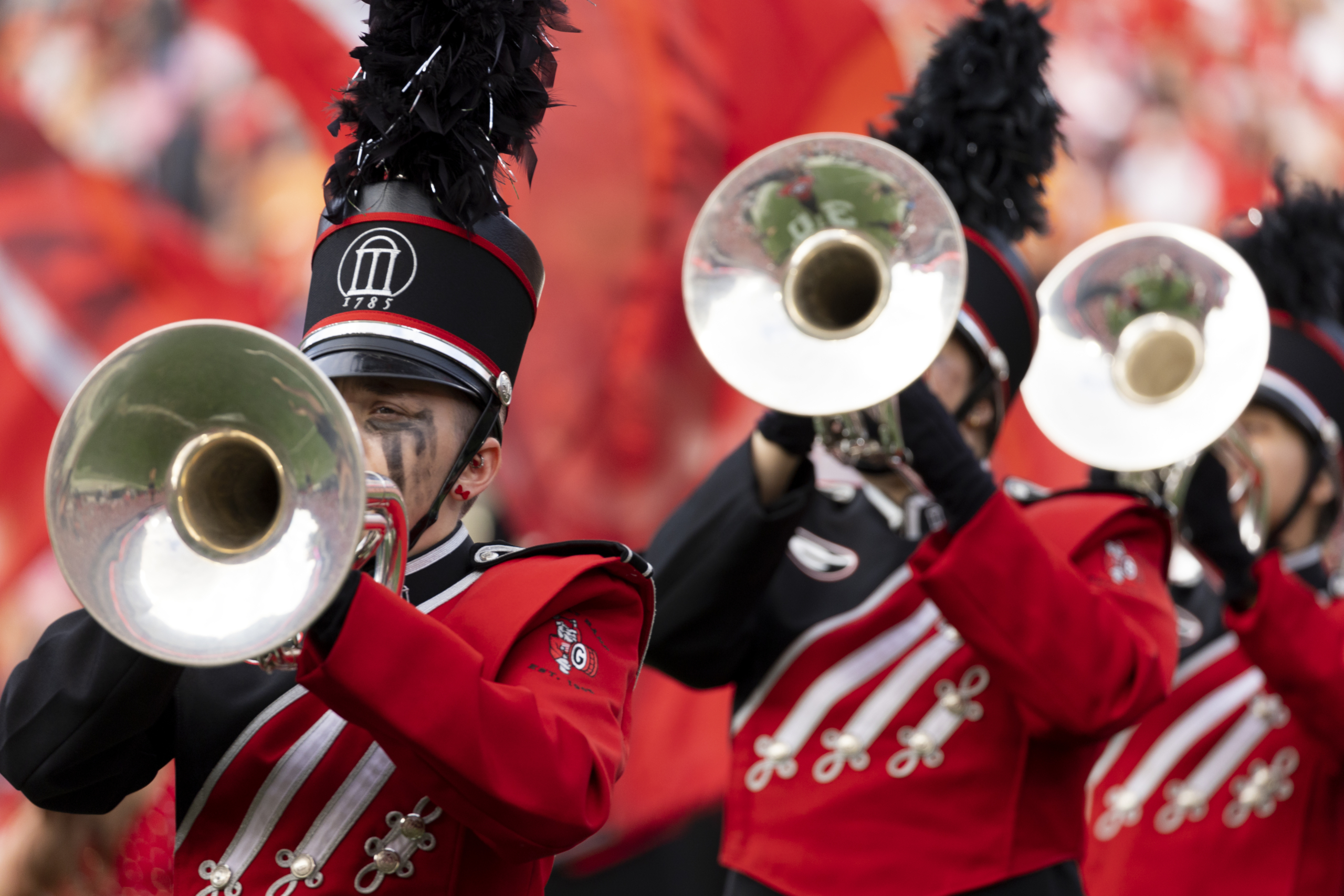
John rarely stops moving once the football season starts. He is constantly checking with partners both internal and external to make sure everything is in place for Saturdays: power, equipment, staffing numbers, and much more. He is also in constant contact with the Georgia Redcoat Marching Band to ensure they have everything they need to embody the moniker Vince Dooley gave them: “The Heart of the Bulldog Spirit.”
And while the Bulldogs compete with a different opponent every week, John faces the same adversary again and again: the vastness of Sanford Stadium. While John and his team do their best to anticipate any potential hiccups, being able to communicate is key to resolving any situations with as little disruption to fans as possible.
“We have so many partners that all come together to make game day happen,” he says. “One of the most important things I do in preparation is to make sure that all of those partners know how and when to talk to each other.”
John’s work doesn’t usually grab headlines — except when it does, like the concessions price cuts announced in 2021 that John helped bring to life — but it does reinforce the bedrock of the Sanford Stadium fan experience.
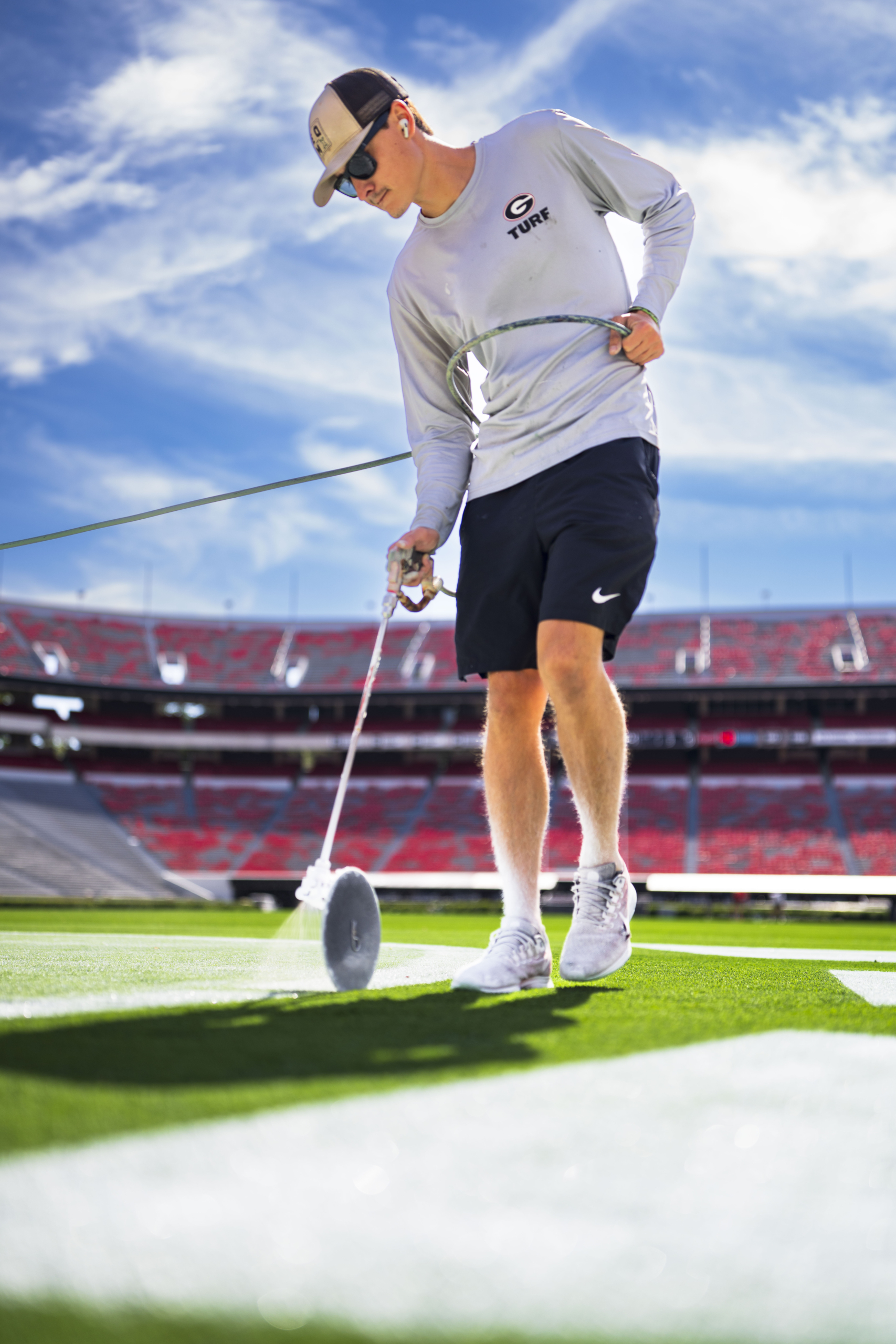
The green grass of Dooley Field is a welcome sight for many Dawg fans. After all the travel, the parking, the walking, they’ve finally made it. But there’s more to that grassy expanse than many realize.
The UGA-developed Tifway 419 hybrid bermudagrass that spans the entirety of the field stands out as one of the few remaining natural grassed fields in college football. Others have transitioned to synthetic turfs that are easier to maintain, but UGA remains steadfast in its commitment to a natural turfgrass that is associated with lower incidences of injury and better temperature control.
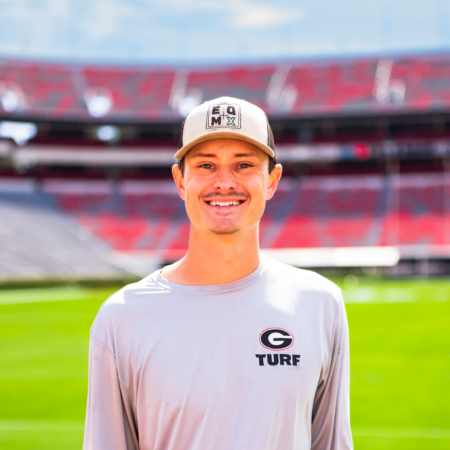
Safety is the primary concern for Ethan Kain, assistant director of athletic turf and grounds, but playability and aesthetics also factor in when preparing for game days.
Full preparation for games in Sanford begins in May, directly after spring commencement ceremonies. The field is tilled and re-sodded before the university’s summer camp programs begin, and the increased traffic during that time has a chance to “toughen up” the field, according to Ethan.
“The field is a lot like the players; they’re lifting and running and training all summer so that they’re strong and ready when the season starts,” he says. “Same with the field.”
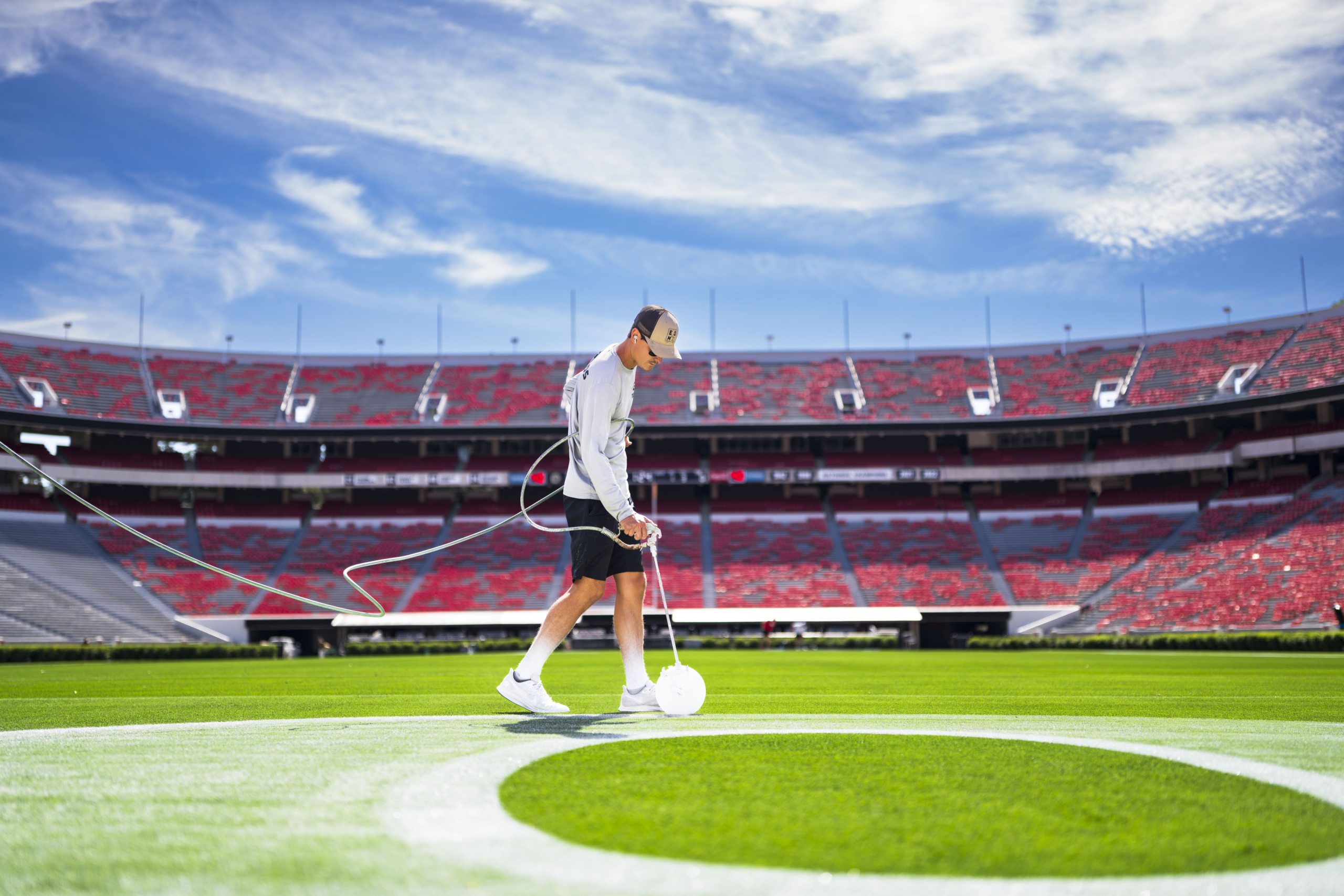
Once the field survives the long Georgia summer, Ethan’s job shifts from growing to maintenance. While many of us might consider mowing the lawn once or twice a month frequent enough, Ethan and his team mow Dooley Field at least five or six times in the week before a home game. Once the field has been trimmed, fertilized and painted, Ethan and his team begin their many safety checks.
“About six hours before kickoff, we put another mow on the field and walk the length to make sure everything is pristine and safe for all the players,” he describes.
Coming from Iowa, Ethan had not seen what a huge space college football occupies in the culture of the South. Rather than feeling like an outsider, however, Ethan found community and satisfaction through working at the heart of a treasured institution.
“Just being a part of something that means so much to so many people and making it happen in a way that’s memorable for people is something I feel a lot of pride in,” says Ethan.
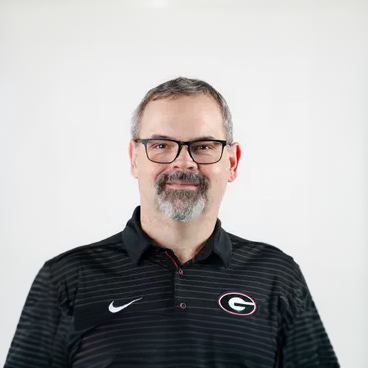
The ball is snapped on fourth down in the final minutes of play, and over 90,000 spectators —with millions more watching around the world — lean to the edge of their seats, desperate to watch every action unfold. This is where Rick Freeman, senior broadcast engineer, comes in — the point person coordinating all of Sanford Stadium’s cameras and video board equipment.
In total, there are five stadium cameras that record the game, plus an additional six cameras from the television trucks, that Rick is responsible for coordinating. On Wednesdays, every camera is laid out in their positions along the sidelines of the field and Rick makes sure that their video feeds are transmitting back to the video board.
By the time Thursday comes, Rick is ready to run through the show with all the camera, video and sound elements. Collaborating here with the back-of-house producers, Rick and his team do a sort of dress rehearsal for all the technical aspects of game day.
Just like any other show, game days at Sanford require a script. From the promotional materials on the video board to any special guests being honored on the sidelines, the script outlines every main story beat planned for the game.
“We review every element of the script so that, from a technical side of things, I can help them pull off the show that they want and that the fans deserve,” he says.
On game days that will be televised, there are twice as many cameras and pieces of equipment that Rick must take into consideration, along with production crews from the broadcast partner.
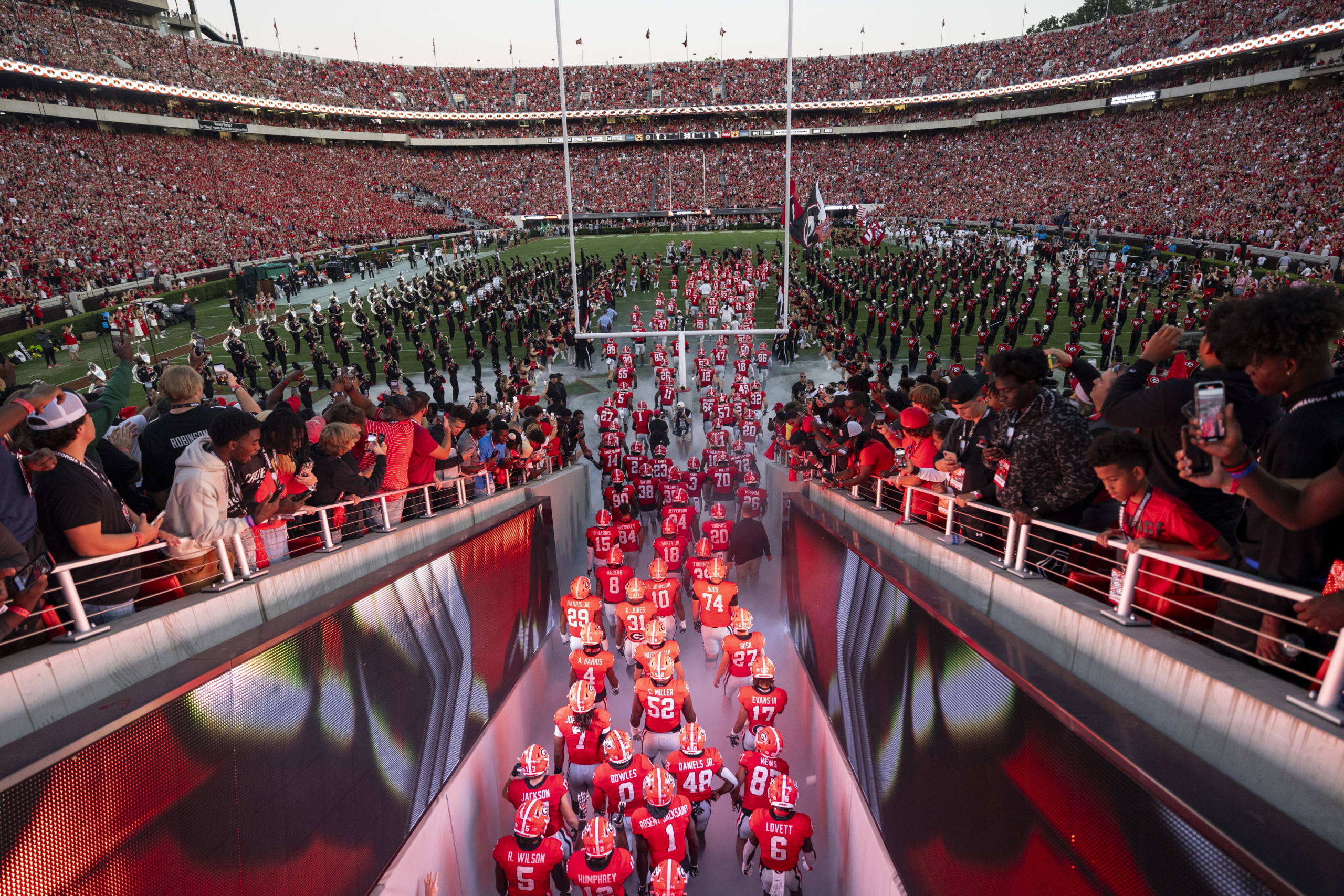
After all the groundwork has been laid and the cameras are ready to roll, Rick says the highlight is seeing the team run out of the tunnel and the audience’s subsequent reaction.
“Knowing how much preparation has to happen before that moment, and then being able to see the intensity of the moment on the fans’ faces is just a huge pay off for me,” he describes.
Red for home, white for away and black on very, very special occasions — these are the most basic tenets of the team that outfits the Georgia Bulldogs. Wil Wells, assistant director of football equipment, has been going to Georgia football games with his family since he was young, and now, he is one of the driving forces behind the Bulldogs’ visual energy.
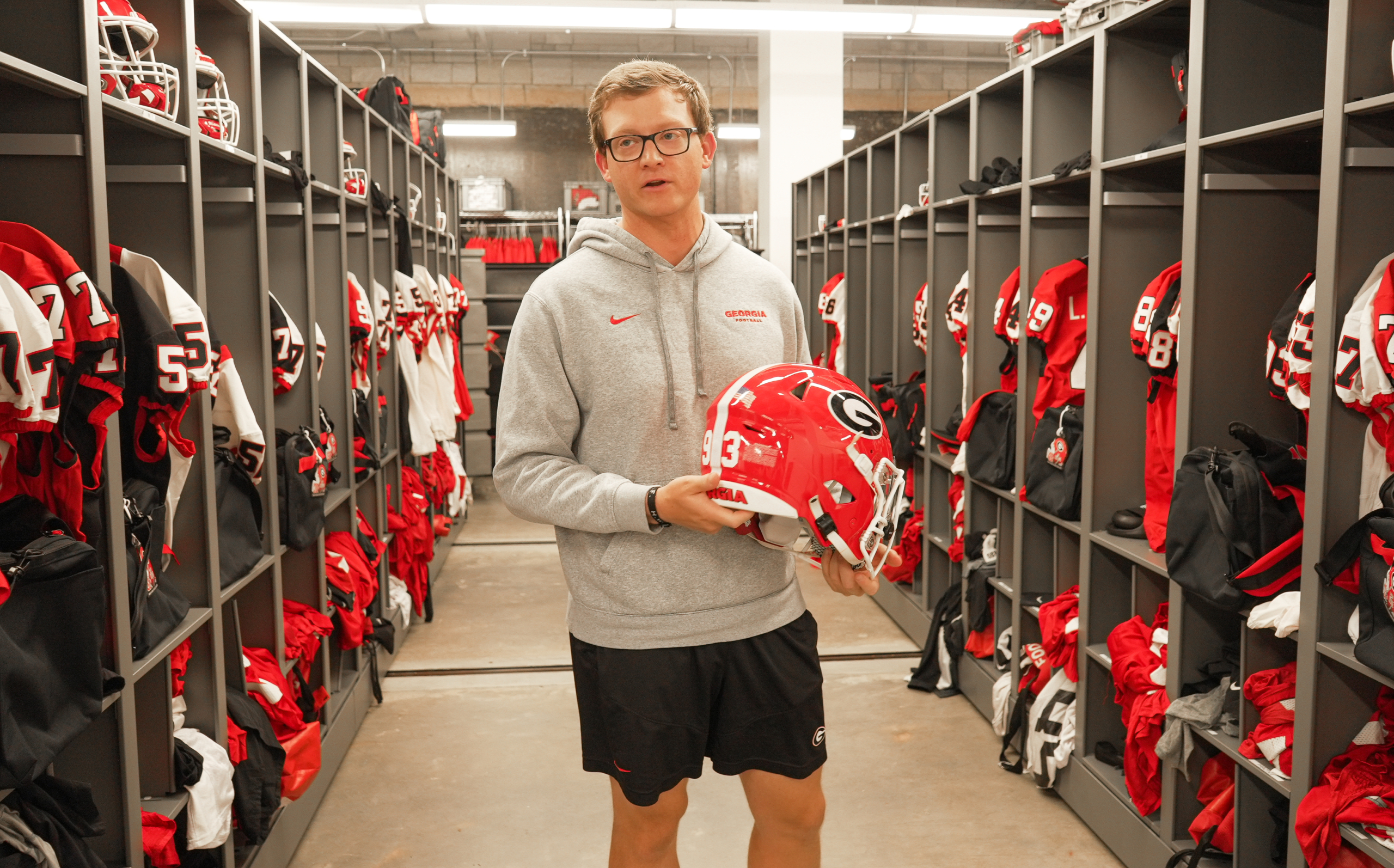
It’s not all about aesthetics, even though uniforms play an important role in helping to get the team and fans in the proper game day headspace. The primary concern for Wil and his team, however, is player safety. Every person on Wil’s team is nationally certified to provide expertise on equipment safety. For instance, Wil’s staff help fit players’ helmets, shoulder pads and cleats with 3D modeling technology.
“If someone on the field is wearing it during a game or even practice, it goes through our team first,” he says. “Safety of our athletes is the number one concern for our team, but we also want to make sure everyone looks good.”
The week of a game, Wil’s team repeatedly cross-references the player roster with equipment lists to make sure each player has their necessary equipment. They do the same for “coaches’ trunks” which are, as Wil describes it, like mobile closets that go in the locker room. For away games, all of this has to get loaded onto a massive 18-wheeler for transport.
Along the way, Wil’s team gives the public glimpses into this process on social media, where the equipment team has amassed a following; the team’s official Instagram account, @ugafbequip, has almost 120,000 followers.
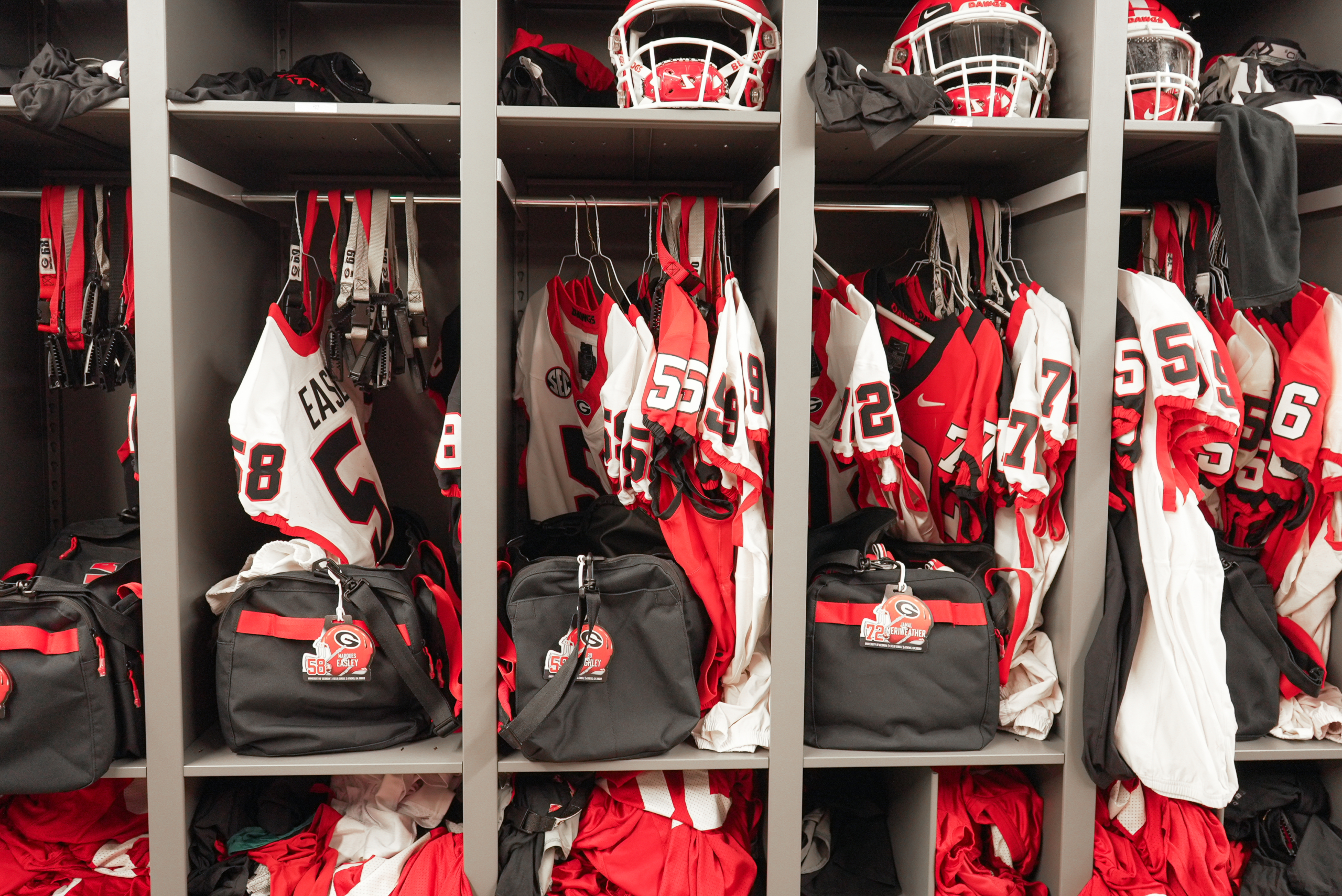
“Our most important job is being prepared and organized while also making sure that, logistically, we can operate as a football program with anything that could be thrown our way on game day,” he says.
The players and fans aren’t the only ones who benefit from Wil’s dedication to his job. He also helps to oversee a team of student workers that help manage practice operations in the week before the game. Wil himself was one of these student managers, and his belief in that experience is reflected in how much he — and his team — pour back into the students.
“Helping students develop personally and professionally is really important to the whole equipment team,” Wil says. “Students in college are going through a lot of life changes, so we want to be a positive experience for them.”
Lights shape a UGA game day: the light of the video board urging fans to get louder, stadium lights illuminating the game below, and the now-iconic red lights that ignite a Sanford Stadium night game. And no one cares more about those lights than Anna Pence, senior producer.
Everything that the fans see on the 52-by-100-feet video board goes through Anna and her team. The videos, promotions and presentations are all meticulously reviewed in a rigorous series of script reviews, sound checks and umpteen technology tests — all spearheaded by Anna.
“I try to have a backup plan for everything,” Anna says. “Technology is super fickle, as we all know, and you can’t really have a backup for every single situation during a live game, but I try to have a plan just in case something doesn’t work.”
During one of her favorite moments of preparation, Anna cuts a striking figure: In an empty stadium on Friday night, she stands alone to run the lights alongside the accompanying sounds from the video board to make sure everything is timed correctly.
“It doesn’t matter if it’s a night game or a noon game, we’re going to run the lights just the same,” Anna describes. “We want to give everyone the same electric atmosphere, no matter what game they come to.”
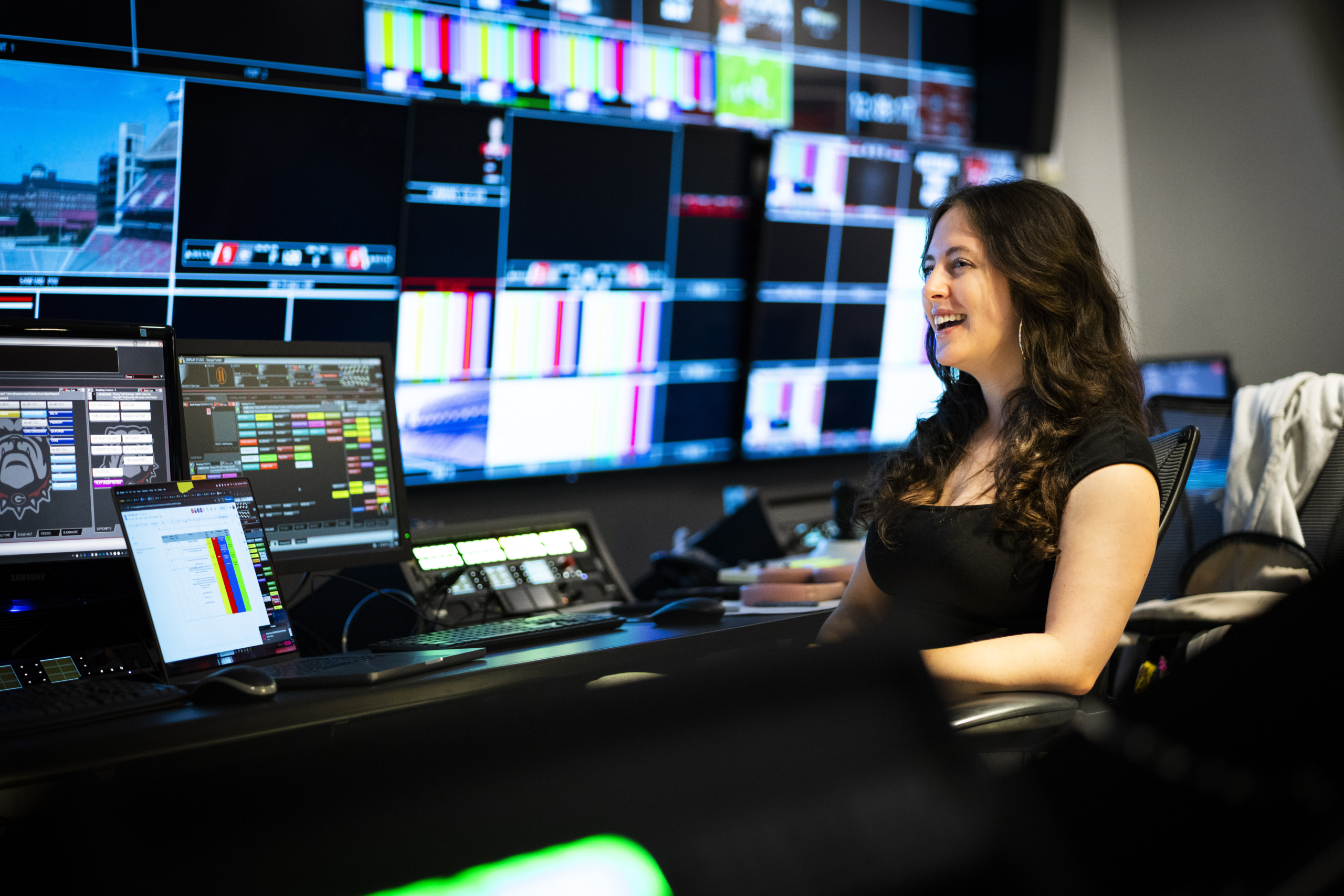
During the games, Anna stays in the media control room, wearing the same red bucket hat she’s worn since she began as senior producer back in 2016. From here, she can oversee the run of show from the back of house. But being tucked away in the control room doesn’t lessen the impact of the stadium’s biggest moments.
Like many, Anna has a crystal-clear memory of the 2019 Notre Dame game, when the stadium’s red lights premiered. In fact, Anna’s involvement was key to the lights’ major impact — it was her idea to shut off the lights in the stadium in the seconds before the red lights came on.
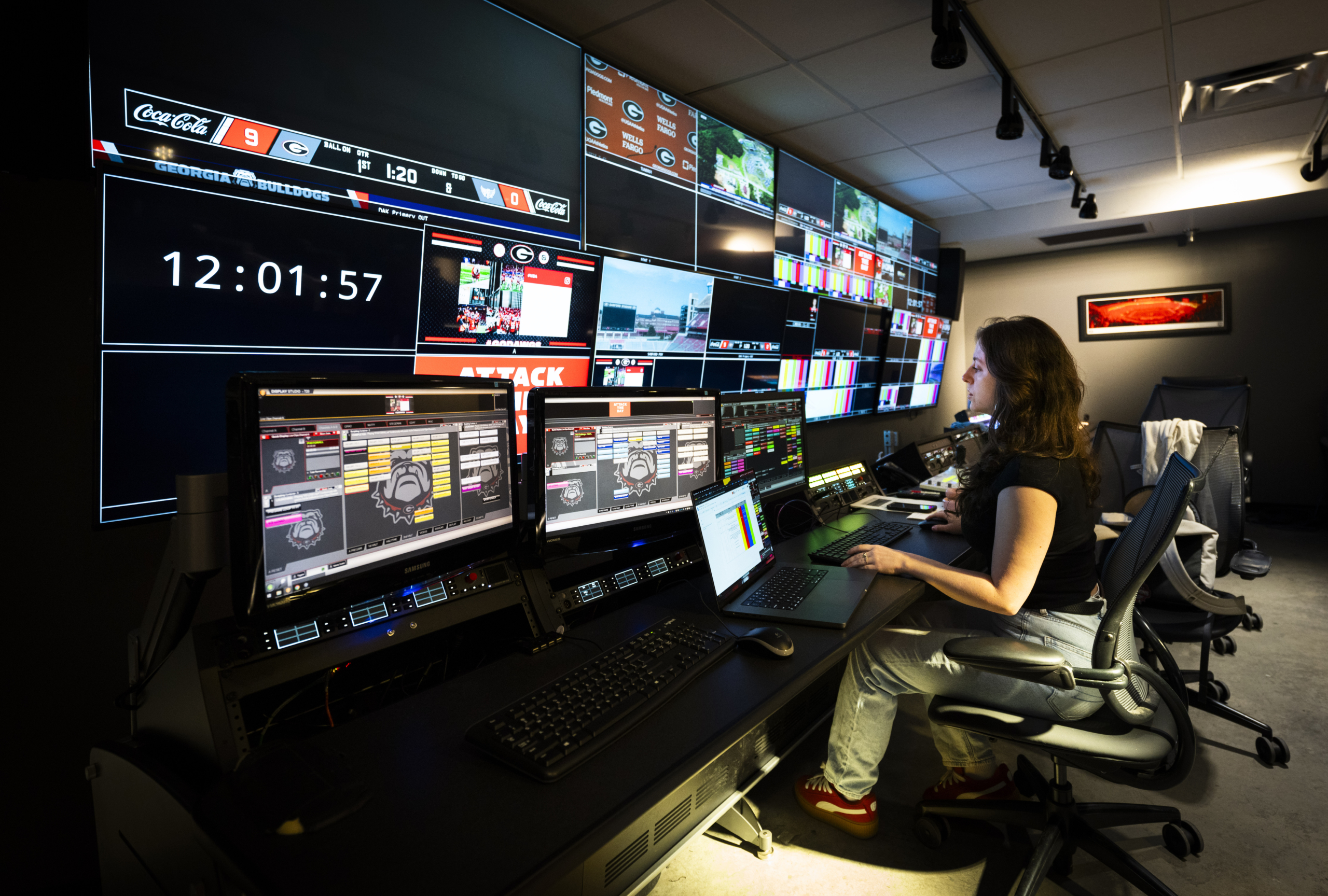
“I remember thinking that it would give the crowd a rush of endorphins because they would think the lights had gone out,” she remembers. “We had never just turned out all the lights in a stadium with almost 94,000 people.”
On cue, darkness fell and persisted for five seconds, then ten and eventually fifteen, and a thick tension descended. The plan had initially been to wait a full thirty seconds, but even from her station in the control room, Anna could feel the crowd growing restless. Making the type of split-second decision only a live production can provide, Anna cut the time short, red beams illuminated the crowd, sirens filled the air, and the moment entered Bulldog history.
“Even from the control room, I remember hearing an audible gasp from the entire crowd in that moment,” Anna says, reflecting on one of the highlights — pun intended — of her career.


 Rachel Perry (BBA ’93)